
Media Releases
Pause. Probe. Protect – cyber resilience campaign
Posted on 16/02/2026
 Cyber security isn’t just about IT systems or software updates. It’s about people, habits and what happens in everyday moments at work.
Most cyber incidents don’t start with a dramatic breach.
They start when someone feels rushed.
When a request feels familiar.
When something doesn’t feel quite right – but no one wants to slow things down.
That’s where the Pause. Probe. Protect campaign comes in.
Why this campaign is needed
Crime Stoppers South Australia and OpSys have partnered to help South Australian businesses strengthen cyber resilience by focusing on culture, behaviour and early action – not just technology.
Previous cybercrime awareness campaigns showed that businesses are increasingly aware of cyber risks. But they also revealed something else: many people are unsure who should act, when to act, or how to raise concerns safely.
Our campaign is about closing that gap.
What does Pause. Probe. Protect mean?
Pause. Probe. Protect is a simple framework that reflects how cyber risks actually arise – and how they’re most effectively prevented.
1. Pause – slow down when something feels urgent, unexpected or out of the ordinary.
- Scammers rely on pressure and routine.
- Pausing creates space to think before acting.
- Remember that ‘urgent’ doesn’t mean immediate.
2. Probe – ask questions, verify details and raise uncertainty.
- You don’t need proof.
- You don’t need technical expertise.
- If something feels off, that’s reason enough to check. It’s okay to ask.
3. Protect – act early and share patterns that could affect others.
- Near-misses matter.
- What looks small in one business may be part of a bigger pattern elsewhere. Patterns protect people.
Cyber safety is everyone’s job
In many small and medium businesses, there’s no dedicated cyber team – and that’s normal.
Cyber resilience lives with finance and payroll teams, admin and reception staff, managers and team leaders, and business owners and executives.
Often, the first person to notice something unusual isn’t an IT expert – it’s someone doing their job and paying attention. Strong cyber cultures make it safe for people to speak up early.
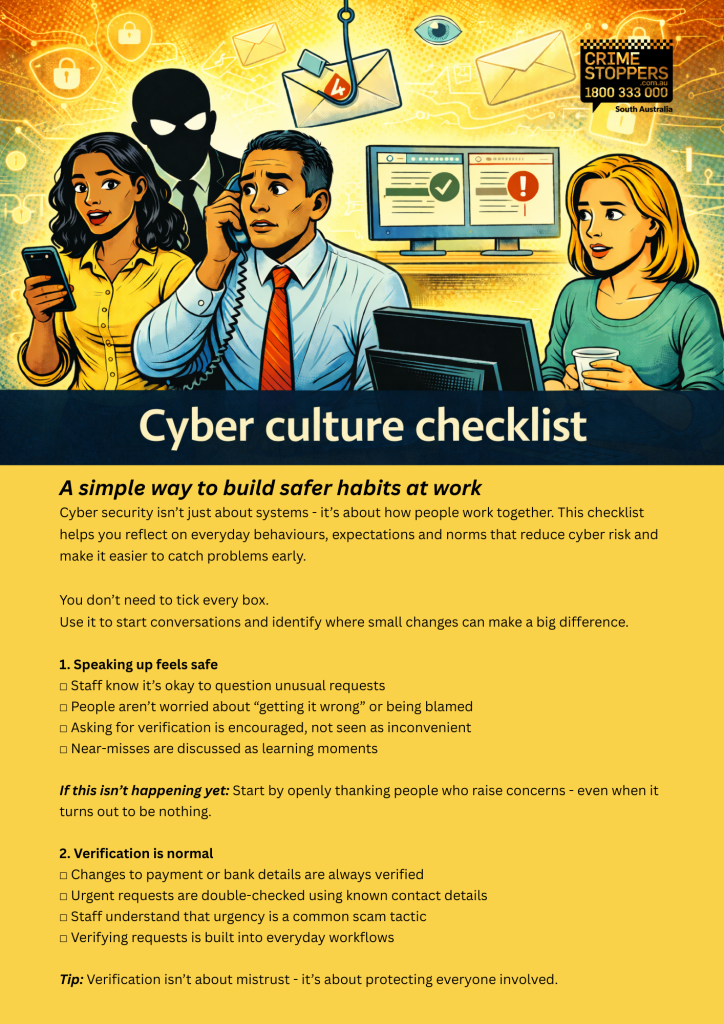
Scoll below or click on the URL to download your copy of a free Cyber Culture checklist.
The growing risk of impersonation
Today’s cybercrime often involves impersonation, where criminals pose as trusted suppliers, colleagues or organisations.
These attempts look professional and familiar, use urgency and authority and exploit routine processes. They don’t always look like scams – which is why culture and verification matter as much as technical controls.
What counts as a near-miss?
A near-miss is any situation where something could have led to cyber harm – but didn’t, because someone paused, questioned it or spoke up early.
Near-misses might include:
- An unusual request that was checked before acting
- A process that didn’t feel right and was questioned
- A pattern of messages that raised concern
Near-misses aren’t mistakes. They’re early warnings – and they’re valuable.
Make sure you scroll below or click on the link to download your free copy of our What counts as a Near Miss flyer.
How leaders can make the difference
Workplace culture is shaped by how concerns are handled.
When leaders thank people for speaking up, slow things down instead of rushing and focus on learning, not blame then people are more likely to raise concerns next time – and risks are caught earlier.
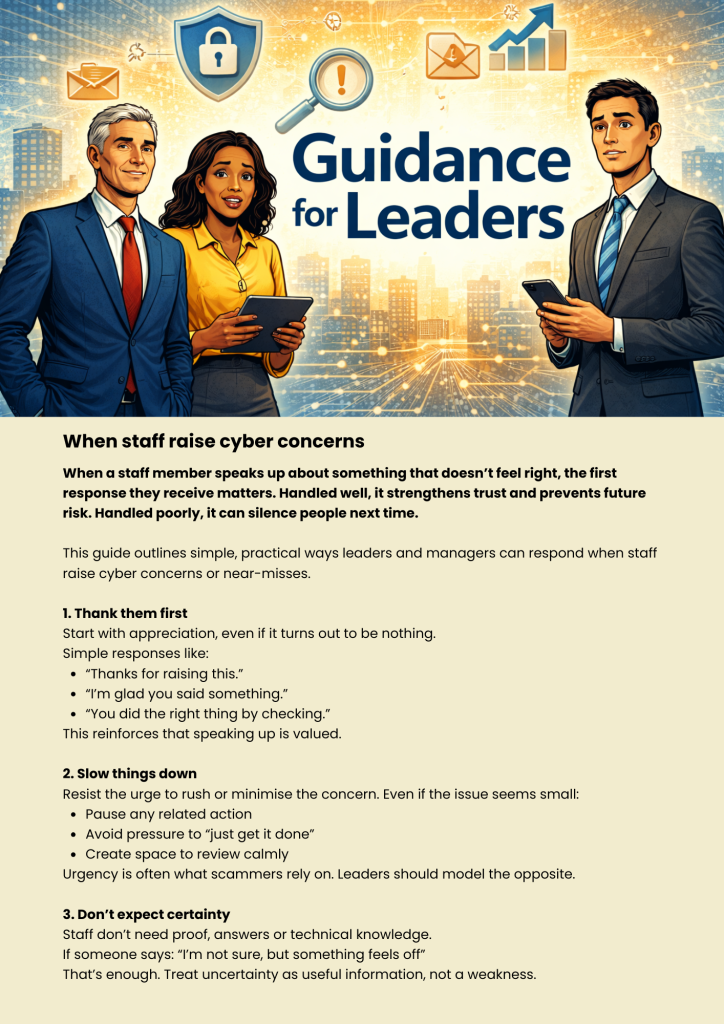
Our Guidance for Leaders flyer below is a free, handy resource for managers and supervisors.
When to report
If you notice repeated suspicious behaviour, impersonation attempts or patterns that could affect other businesses then report it anonymously to Crime Stoppers SA.
You don’t need certainty. You don’t need proof.
And you don’t need to share personal details.
Call 1800 333 000 or go online at https://crimestopperssa.com.au
FREE DOWNLOADS
 |
 |
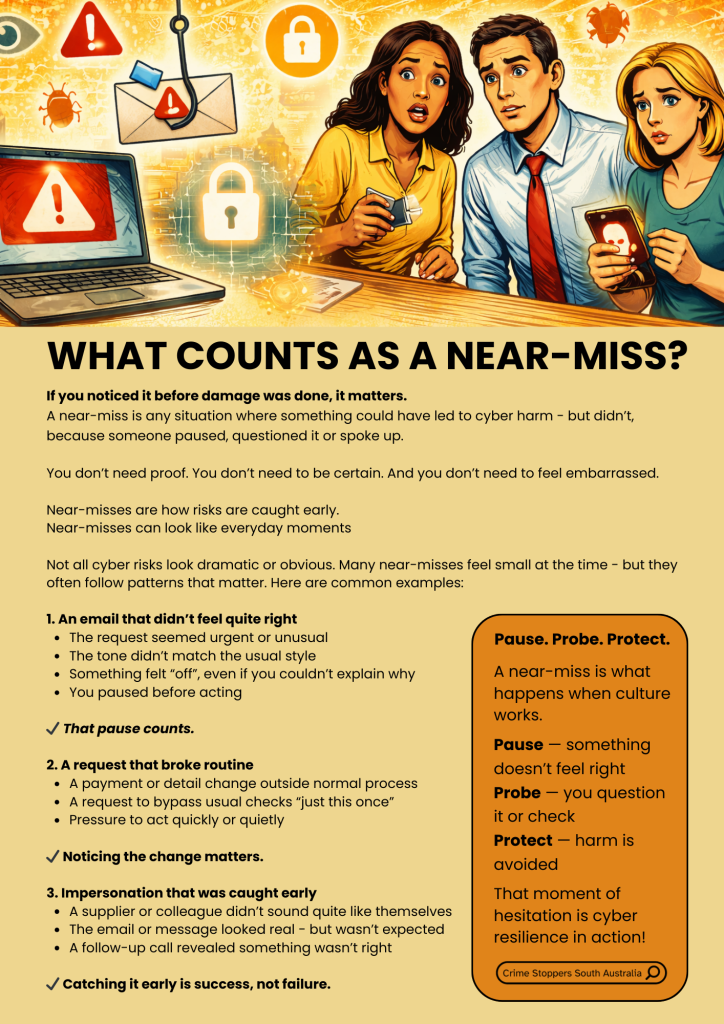 |
| Click the image above to download your Cyber Culture Checklist | Click the image above to download the Guidance for Leaders flyer | Click the image above to download the Near Miss flyer |
CASE STUDIES
The following case studies are based on de-identified real-world situations where cyber harm was narrowly avoided. In each example, no money was lost and no systems were breached – because someone paused, questioned what they were seeing, or spoke up early.
 |
CASE STUDY 1: Local government contractor
Q: What first caught your attention? It wasn’t dramatic. The email was short and polite, asking for a document to be resent because “the original couldn’t be opened”. That happens all the time. But it was sent outside usual hours, and it asked me to send it directly instead of uploading it like we normally do. Q: What made you pause? Honestly, it was just a feeling. Nothing obvious. But we’d recently talked about slowing down when something doesn’t follow normal process, so I didn’t rush it. Q: What happened when you checked? I contacted the supplier the next day through our usual channel. They hadn’t sent the email at all. Someone had been impersonating them to collect documents. Lessons learned: We realised that near-misses don’t always involve money. Sometimes they’re about access, information or testing boundaries. Speaking up early stopped something bigger from developing. |
 |
CASE STUDY 2: Mid-sized health services provider
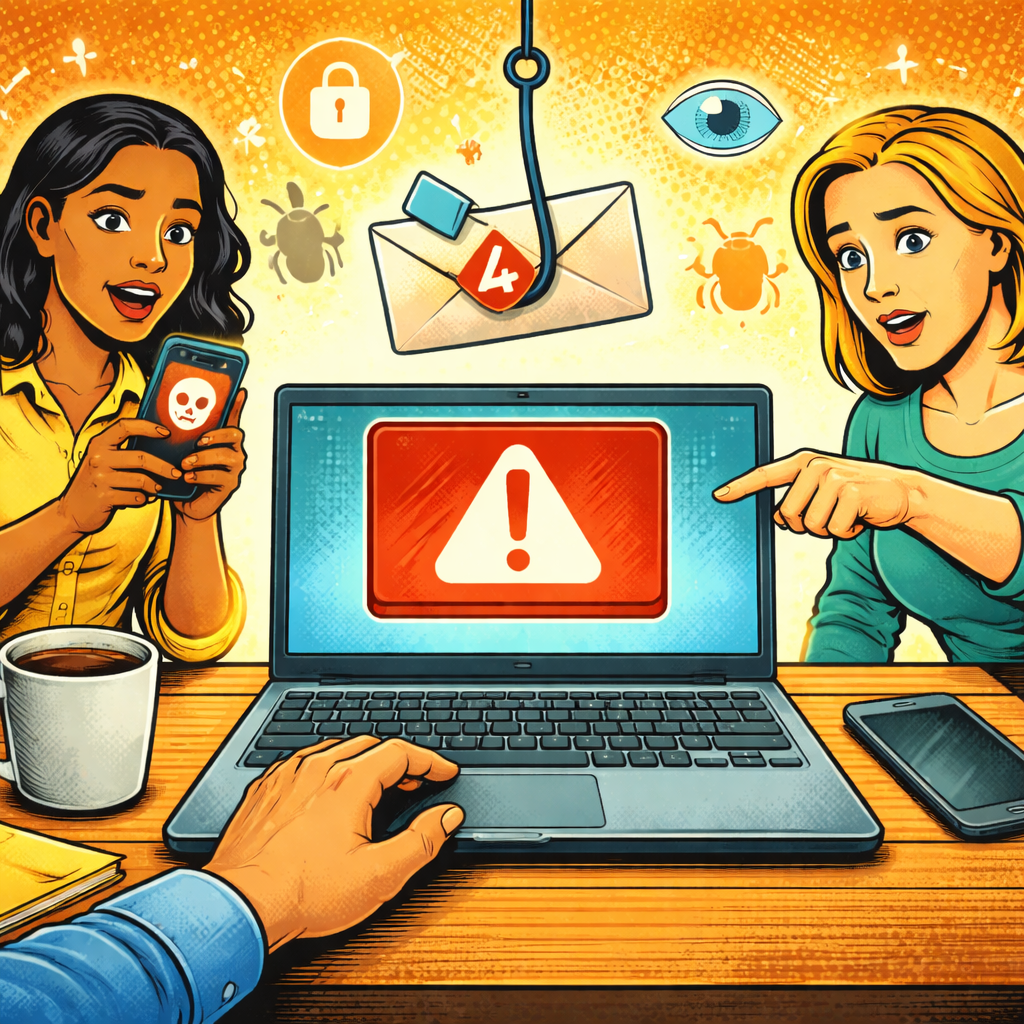
Q: What raised concerns? Q: Why didn’t you just follow it? Q: What did you discover? Lessons learned: We learned that impersonation isn’t always about money straight away. Sometimes it’s about reshaping behaviour so future scams are easier. Questioning “new processes” became a cultural norm after that. |
 |
CASE STUDY 3: Retail operations group
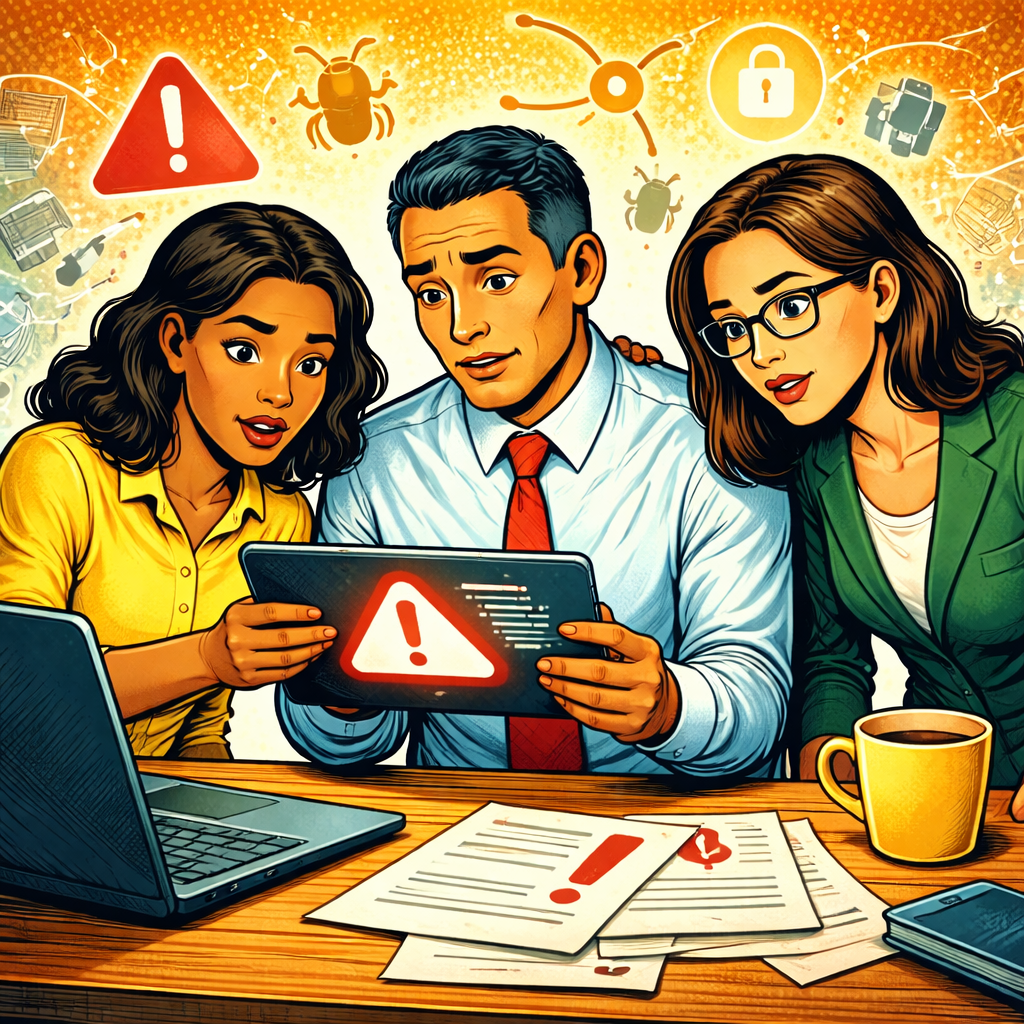
Q: What happened? Q: What made them raise it anyway? Q: Why was that important? Lessons learned: If that staff member hadn’t felt comfortable speaking up, we wouldn’t have connected the dots. Culture turned small observations into useful intelligence. |
 |
CASE STUDY 4: Professional services firm
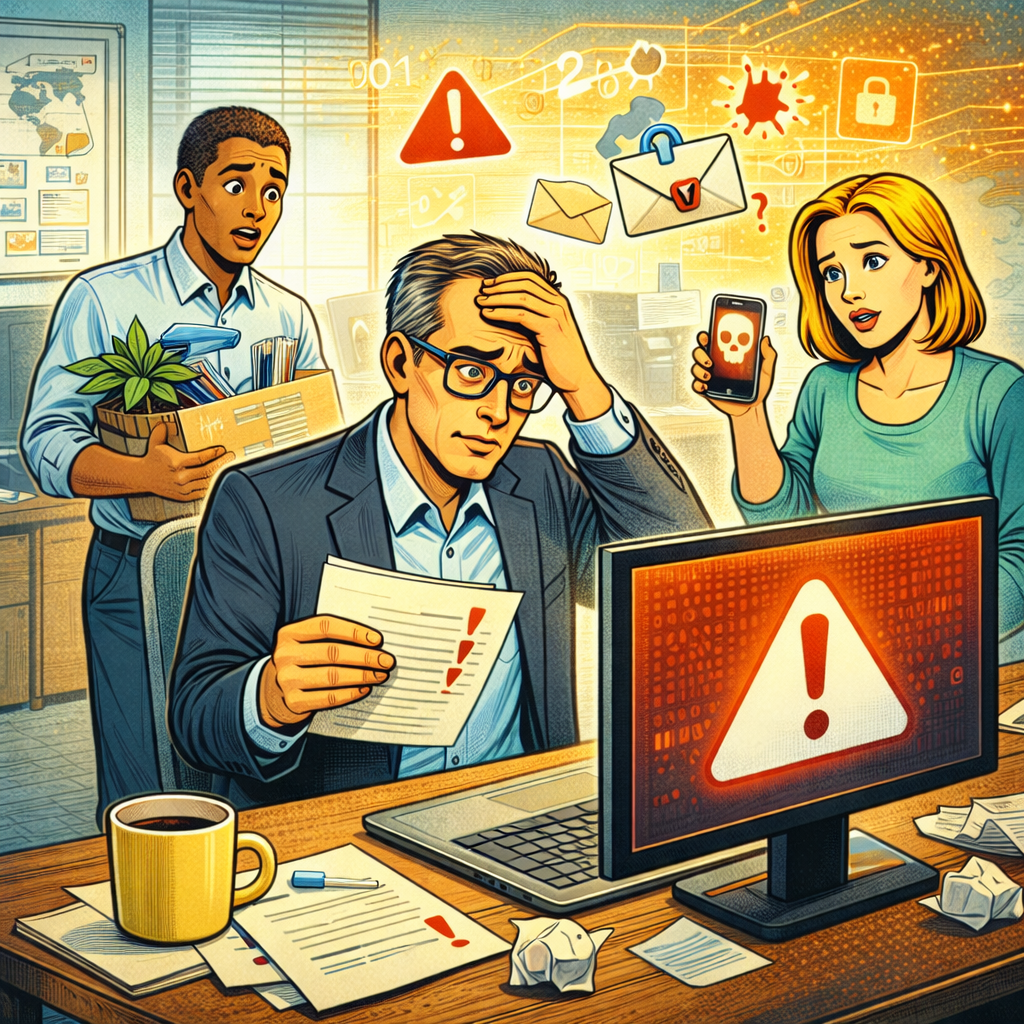
Q: What made this situation tricky? Q: What stopped it from going further? Q: What did you find out? Lessons learned: We realised impersonation often hides in familiarity. Our biggest defence wasn’t spotting errors but noticing when things drift slightly from normal. |
 |
CASE STUDY 5: Small logistics business
Q: What made you decide to report something that hadn’t caused harm? Q: Why not just ignore them? Q: Why did reporting matter? Lessons learned: You don’t need a loss to contribute to prevention. Patterns matter more than single events. |
This campaign is a joint initiative by Crime Stoppers South Australia and OpSys, supporting South Australian businesses to build safer, stronger and more resilient workplaces.
YOU MAY ALSO LIKE TO READ
Nearly 12,000 contacts in six months shows South Australians are speaking up
11/09/26 | Article, Media Releases
Almost 12,000 contacts were made to Crime Stoppers SA in the first six months of 2026, as South Australians continued…

Deception – Hawthorn
08/09/26 | Media Releases, Video
Can you identify this man? Just before 5pm on Friday 3 July 2026, an elderly woman was allegedly deceived into…