
Media Releases
South Australians urged to ‘Call It Out’ as organised crime targets native wildlife
Posted on 14/11/2025
South Australians are being urged to help expose the state’s growing problem of wildlife trafficking, as organised criminal networks turn from parrots and lizards to even the smallest of native species to make profit.
The new Call It Out campaign, launched by Crime Stoppers South Australia in partnership with the Department for Environment and Water (DEW) and the Wildlife Crime Research Hub, shines a light on the cruel and illegal trade that sees native animals stolen from the wild, hidden in boxes or parcels and sold.
Each year, traffickers target parrots, lizards, snakes and frogs and even native ants and other invertebrates, with many animals suffering or dying in transport. Those that survive are traded locally or smuggled overseas to meet demand in the black market for exotic pets and breeding stock.
Crime Stoppers SA CEO, Nigel Smart, says it’s not just birds and reptiles being targeted, with native ant species now also being targeted by organised crime groups because of their size and behaviour.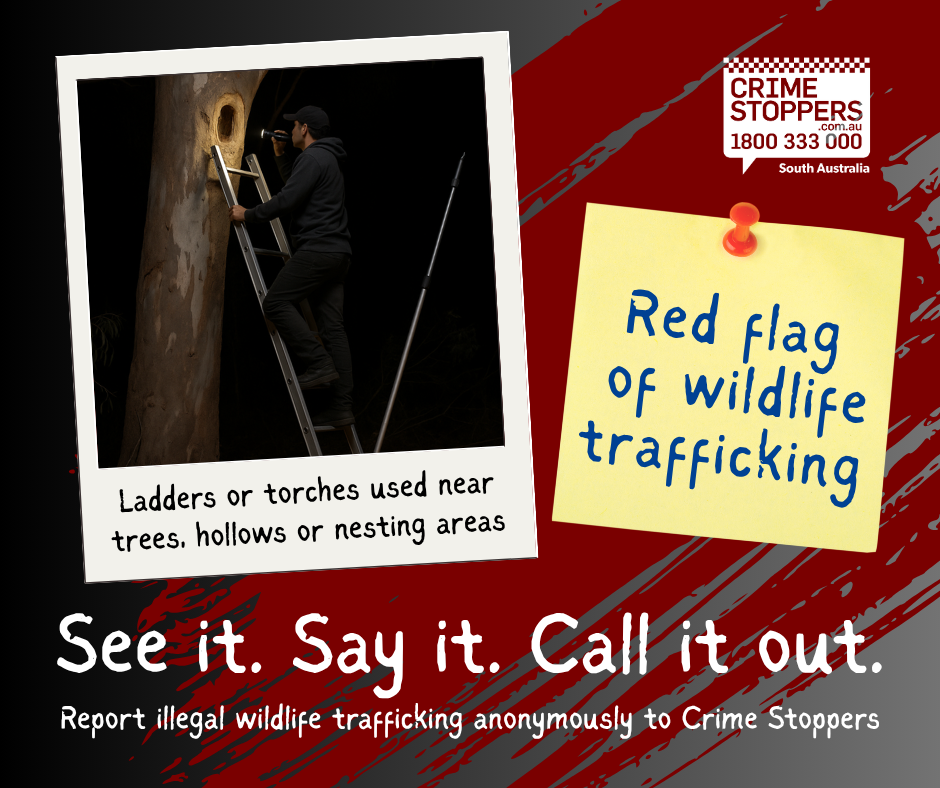
“We’ve heard reports about organised crime paying people to dig up ant mounds and supply green headed and bull ant colonies for illegal export,” Mr Smart said.
“Whether its parrots stuffed into postal tubes, lizards hidden in socks or other native wildlife collected for sale overseas – this business is cruel, illegal and it’s happening right here in South Australia,” he said.
Crime Stoppers SA reminds people that public awareness and vigilance are key to stopping traffickers. Even small details – a vehicle in an odd place, a suspicious online ad or someone digging up soil – can make a difference,” Mr Smart said. “If something doesn’t look right, we want people to trust their instincts and report it anonymously.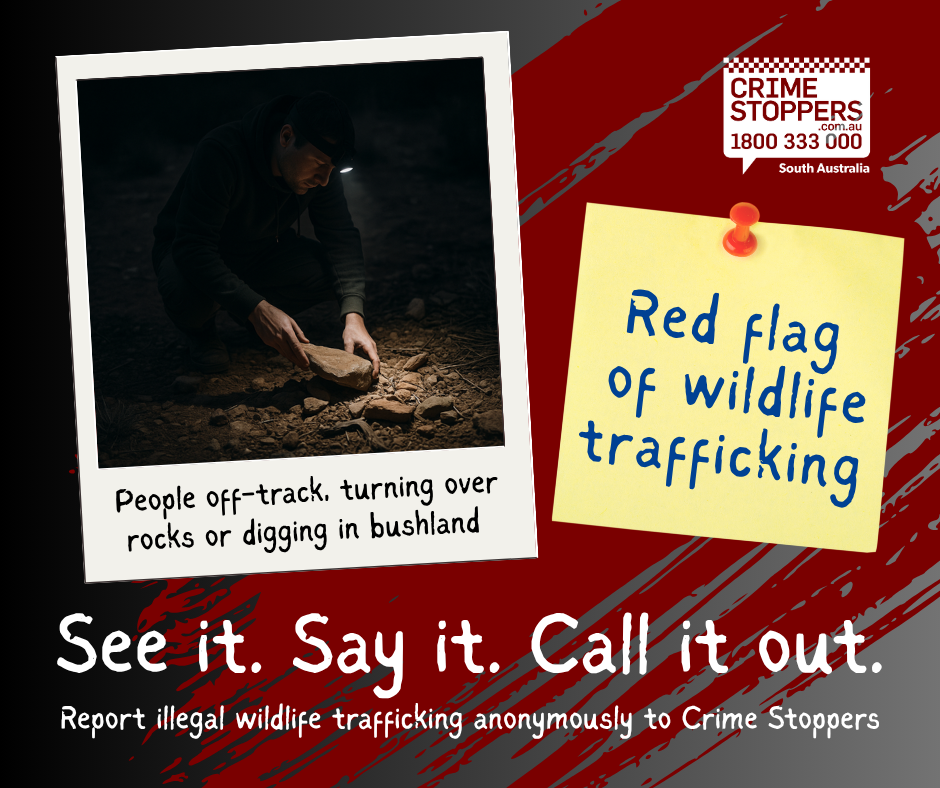
The Call It Out campaign highlights practical warning signs that anyone might encounter in the community, including:
- People digging, trapping or collecting wildlife in bushland or reserves.
- Vehicles parked off-track or hidden, especially with ladders or equipment near trees or hollows.
- Online listings for native animals without a South Australian permit number (for non-exempt species).
- People keeping large numbers of native animals in poor conditions.
- Digging up ant mounds or collecting insects in jars or containers.
While some South Australians legally keep, breed and trade native wildlife under licence, traffickers operate outside this regulated system.
Wildlife trafficking is a multi-billion-dollar global industry and one of the fastest-growing forms of organised crime. South Australia’s distinctive native species – including Major Mitchell’s cockatoos, shingleback lizards and green-headed ants – are highly sought after by collectors and international buyers.
Under the National Parks and Wildlife Act 1972 (SA), it is an offence to take, keep, sell or traffic protected animals without authorisation. Penalties include fines of up to $100,000 and imprisonment for up to two years. Additional penalties apply under Commonwealth law for animals smuggled across international borders.
Anyone who sees or suspects illegal wildlife activity can report it anonymously to Crime Stoppers South Australia. Reports are securely shared with DEW for investigation and can be made online at dew.crimestopperssa.com.au
You do not need to give your name, and you will not be asked to go to court.
Find out more about the campaign and red flags of illegal wildlife trafficking here.
DISCLAIMER: All imagery used in the Call It Out campaign has been AI-generated for illustrative purposes only. No distressed, injured or trafficked animals were photographed or used in the creation of this campaign. The images are designed to raise awareness of the cruelty and impacts of wildlife trafficking in South Australia, but they do not depict real incidents or actual animals in distress. This approach ensures the campaign communicates the seriousness of the issue while avoiding any harm to animals.
YOU MAY ALSO LIKE TO READ
Nearly 12,000 contacts in six months shows South Australians are speaking up
11/09/26 | Article, Media Releases
Almost 12,000 contacts were made to Crime Stoppers SA in the first six months of 2026, as South Australians continued…

Deception – Hawthorn
08/09/26 | Media Releases, Video
Can you identify this man? Just before 5pm on Friday 3 July 2026, an elderly woman was allegedly deceived into…